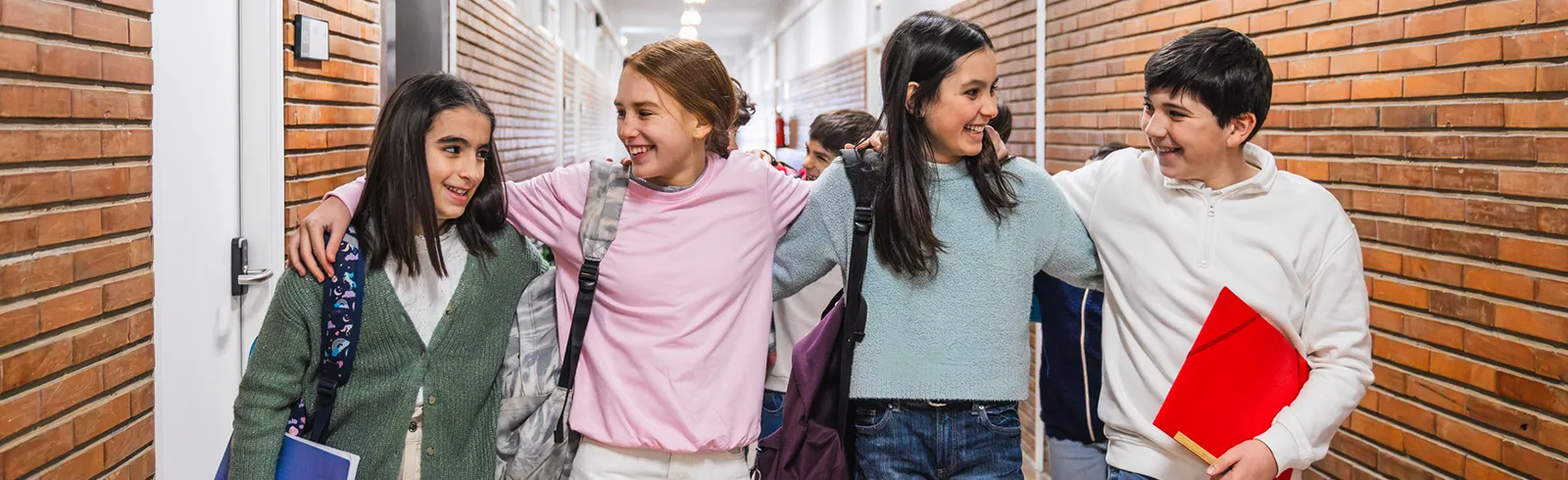
A Montessori Environment for Early Adolescence
Early adolescence is a period of profound transformation. Dr. Montessori described adolescence as a “social newborn”— a period when young people form their identity and discover their place in the world. Between the ages of 12 and 15, young people experience rapid physical, emotional, and cognitive change. Dr. Montessori recognized that adolescents require an educational environment that acknowledges this developmental transition and supports their emerging independence, social awareness, and sense of purpose.
In Montessori education, the adolescent program connects academic study with meaningful work, community participation, and real-world experiences. Students continue to engage deeply with traditional academic subjects while also developing responsibility, collaboration, and practical competence.

Meaningful Work and Purposeful Activity
During early adolescence, students benefit from opportunities to work with their hands and bodies while engaging their minds. This balance supports concentration, emotional regulation, and a sense of accomplishment during a time of significant developmental change.
At Laniakea Montessori School, Lower Secondary students participate in meaningful work throughout the week, including:
• gardening and environmental stewardship
• service learning in the community
• campus care and restoration of learning spaces
• collaborative projects that integrate academic subjects
These activities are not separate from academic learning; rather, they provide a living context for mathematics, science, language, and social studies.
Community and Service
Each Friday, students participate in Service Day, dedicating time to caring for the school environment and contributing to the wider community. These experiences help adolescents develop empathy, responsibility, and an understanding of how their efforts contribute to something larger than themselves.Practical life skills, such as cleaning, organization, and caring for shared spaces, support the development of their skills and awareness in their home environment.
Through this work, students begin to see themselves as active participants in society rather than passive recipients of information.
Academic Depth and Intellectual Curiosity
While hands-on work and community engagement are central to the Montessori adolescent experience, rigorous academic study remains essential.
Students explore literature, mathematics, science, history, and the arts through inquiry-based learning that encourages critical thinking and independent research. Lessons are often interdisciplinary, helping students see connections between subjects and the real world.
A Prepared Environment for Adolescence
The Lower Secondary environment is carefully designed to support collaboration, reflection, and independence. Students work both individually and in small groups, developing the executive function skills necessary for advanced study and responsible decision-making.
Guides serve as mentors and observers, helping adolescents navigate both their intellectual growth and the developmental challenges of early adolescence.
