Preschool & Early Childhood Education in Gainesville, Florida
The Children’s House in Gainesville, Florida, is thoughtfully prepared and guided by Montessori educators with specialized training in child development and the science of how children learn.
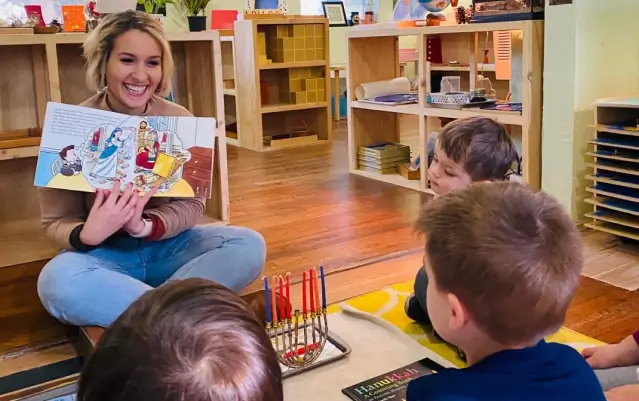
Montessori guides are careful observers of each child’s developmental readiness. Through intentional lessons and hands-on materials, they support the development of language, early literacy, mathematics, music, art, practical life, and scientific exploration. Lessons are introduced individually or in small groups when a child is ready, allowing learning to unfold naturally through curiosity and discovery.
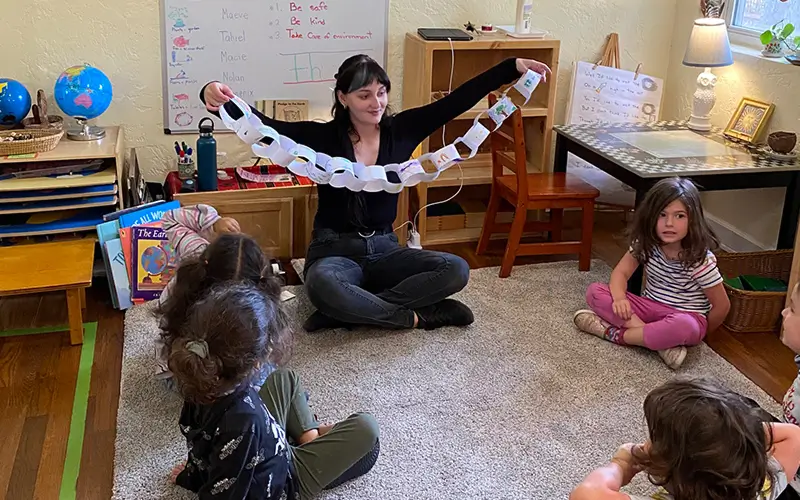
Within the Montessori classroom, you may not immediately notice the teacher leading from the front of the room. Instead, guides are often working quietly beside one or two children, introducing new materials, offering support, or observing the class in order to understand how each child is progressing within the environment.
“The Children’s House”
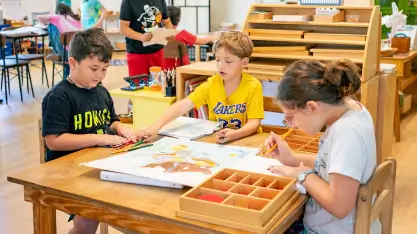
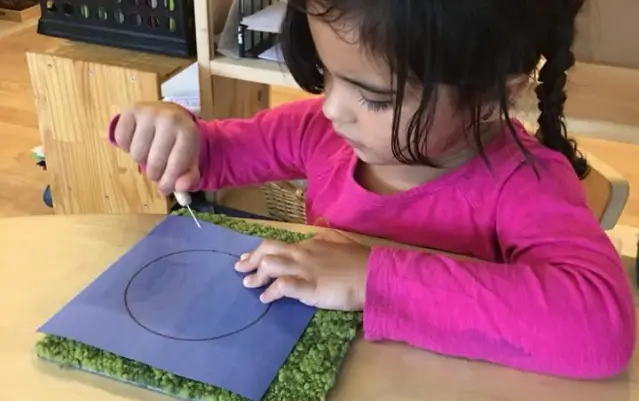
This is the children’s community. They move freely within it, selecting work that captures their interest rather than participating in all-day lessons and projects selected by the teachers. In a genuine sense, even young children are responsible for the care of their own child-sized environments. When they are hungry, they prepare their own snack and drink. They go to the bathroom without assistance. When something spills, they help each other carefully clean things up.
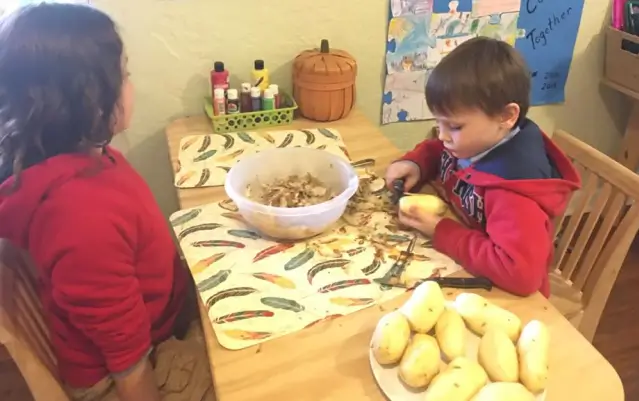
Since the first Children’s House opened in 1907, parents have been amazed to see small children in Montessori classrooms cut raw fruits and vegetables, sweep and dust, carry pitchers of water, and pour liquids with barely a drop spilled.
The children normally go about their work so calmly and purposely that it is clear to even the casual observer that they are the masters in this environment: a “Children’s House.” It is here, in the Children’s House, that children develop good work habits and a sense of responsibility for their work and the environment. The goal is for children to learn how to take care of themselves, others, and the world around them.
What are the elements of the Montessori approach that create a unique learning environment for early education in Gainesville, FL?
Let us suggest a few…
Liberty
Liberty is essential to learning. Through free choice children express and strengthen their individuality, fostering the development of self confidence and integrity. Freedom of choice reinforces the construction of a healthy and vibrant will as well as independent thinking. Montessori explains, ‘”The child ‘constructs’ his (or her) own will by a process of self education … developing the will by making decisions.”
Activity
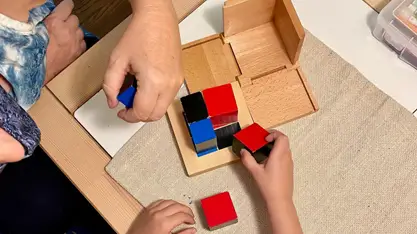
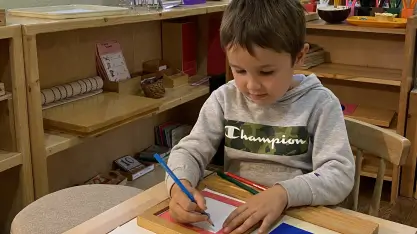
Montessori learning strategies for all developmental stages call for the inclusion of purposeful activity – activity which connects the intellect with real to life experiences. The didactic materials that are found in Montessori environments are tools for reflective action. They are meaningful in that they draw the learner into relationship. They are not ‘tools for teaching’ as much as they are experiences upon which one constructs personalized theory. Knowledge is created through the transformation of experience.
Responsibility
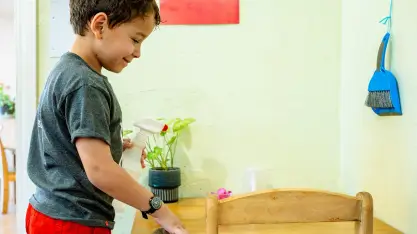
The boundary of liberty is the domain of the responsibility. Every child needs opportunities to acquire social, physical and moral responsibility. In the Montessori learning environment responsibility. In the Montessori learning environment responsibility is developed through experience and natural consequences.
Children are provided opportunities through social life activity to align themselves with the highest values needed in a democratic society.
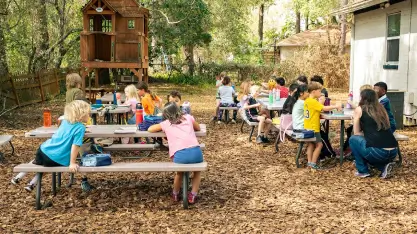
Community
Communion is a basic human need to belong. It is an act of sharing that creates a context for personal and group meaning. A healthy community that requires the nurturing of deep communication skills – skills that honor children as individuals and ones that create a safe space for listening, hearing and honest dialogue.
Love
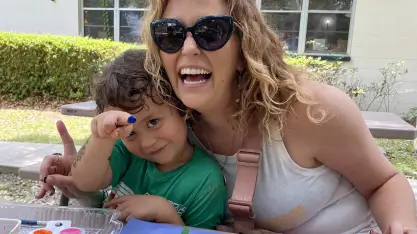
Love is not only the attractive force that compels us to be with each other, it is a continuum of respect and reverence for life and the unfolding potential of humanity. Without love, learning is reduced to a method or a subject and the field of experience is limited.
Montessori explains, “A teacher must not imagine she can prepare herself for this vocation simply by acquiring knowledge and culture. Above all else she must cultivate a proper attitude to the moral order.” In every school subject there is an activity of love. It is this spiritual component which differentiates a Montessori class from a class that uses Montessori materials.
“We must help the child to act for himself, will for himself, think for himself; this is the art of those who aspire to serve the spirit.”Maria Montessori
Educational Focus
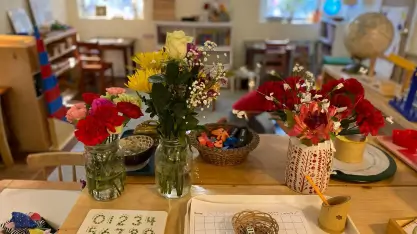
In the Montessori classroom, you’ll notice the environment is carefully prepared to allow children to freely engage with various educational materials. The early childhood classroom typically has five major curriculum areas: Practical Life, Sensorial, Math, Language, and Cultural (or science and geography). You will also often find separate areas for the Art and Music & Movement, as well as an outdoor space.
The Montessori curriculum for early childhood is designed to foster independent learning, curiosity, and the development of fundamental skills across a range of areas. Recognized worldwide for its unique approach to education, Montessori schools emphasize hands-on learning, self-directed activity, and collaborative play. As a parent or educator, understanding the five core areas of the Montessori curriculum will help you appreciate the breadth and depth of experience it offers young children.
Practical Life
The exercises of Practical Life provide the foundation for all other activities in the
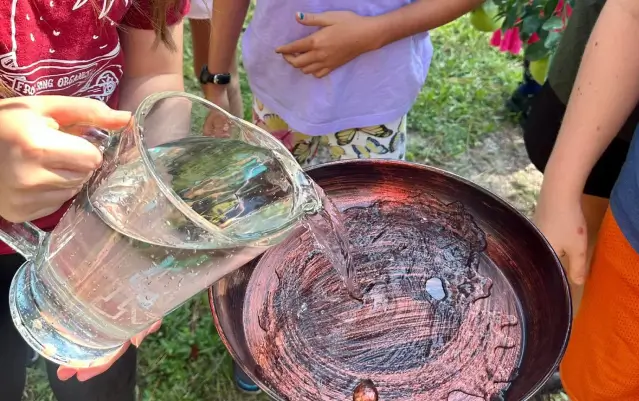
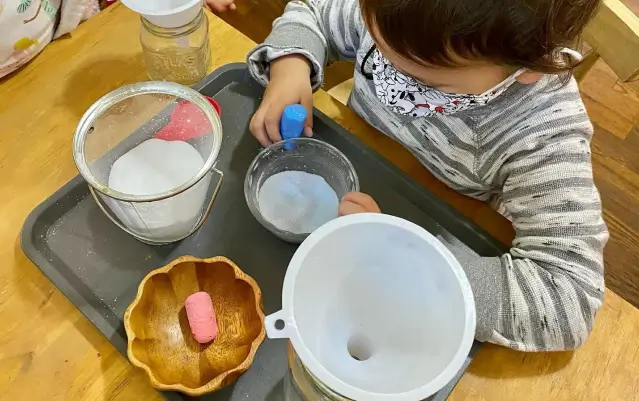
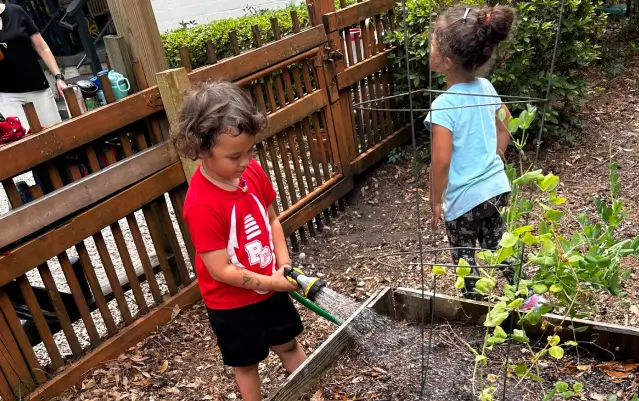
Montessori classroom, fulfilling the child’s plea: “Help me to do it myself!” Through exercises in daily living, such as pouring and scrubbing, sewing and gardening, or practicing grace and courtesy, the child gains confidence and mastery of the environment. After individual skills are refined, children apply them in purposeful work, such as serving juice or polishing. Specifically, these activities contribute to the control and coordination of movement, development of concentration, and the self-esteem that comes with making a real contribution to the group.
- Care of Self: Tasks that foster personal independence, such as buttoning
shirts, tying shoes, brushing teeth, and washing hands. - Care of the Environment: Activities focused on upkeep and responsibility,
such as sweeping floors, watering plants, wiping tables, and arranging
flowers. - Grace and Courtesy: Social lessons that teach respect, polite manners, and
conflict resolution, like greeting guests, interrupting respectfully, and
serving others. - Control of Movement: Fine and gross motor skill exercises, such as
pouring water, spooning dry beans, and carrying objects without spilling.
Grace & Courtesy
Grace and Courtesy is a fundamental aspect of the Montessori curriculum. It is an essential part of Montessori philosophy, which emphasizes the importance of respect, empathy, and kindness. Grace and Courtesy lessons teach young children how to interact with others in a polite, respectful, and considerate manner.
The Montessori Method of education recognizes that learning to interact with others is as important as learning academic skills. Grace and Courtesy lessons are integrated into the curriculum from the beginning. Children are taught how to greet others, how to say please and thank you, how to take turns, and how to resolve conflicts. These lessons help children develop social skills, build relationships, and create a sense of community.
Language
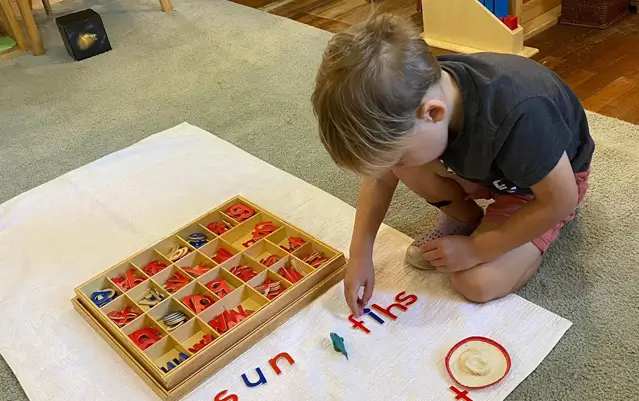
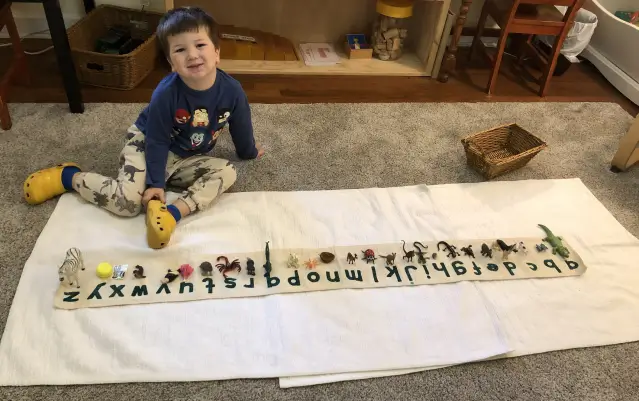
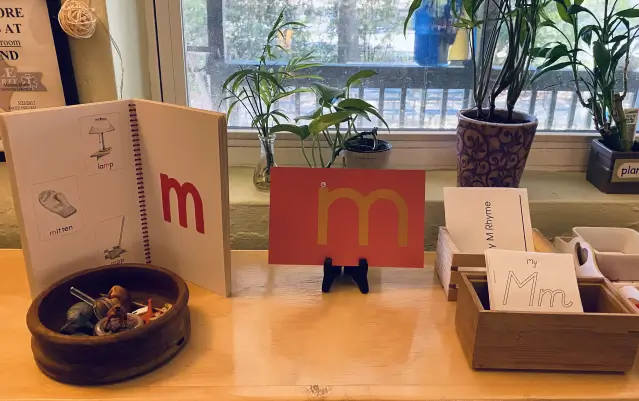
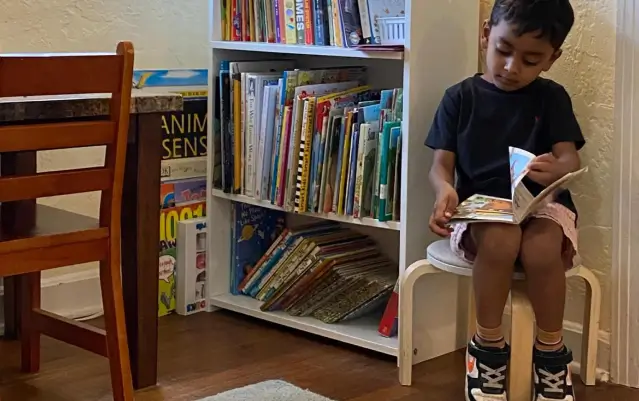
The Montessori approach to language and literacy development in early childhood is grounded in the belief that children learn best through hands-on, experiential learning. In a Montessori classroom, children are encouraged to explore language and literacy through a variety of activities and materials. Montessori schools place a strong emphasis on developing literacy skills in young children, with the goal of creating confident, independent readers and writers, with a passion for the written and spoken word. By providing a dynamic and engaging learning environment, Montessori educators help children develop a love of reading and writing that will last a lifetime. Given the opportunity, most children are ready to learn to read between ages 5-6.
Sensorial
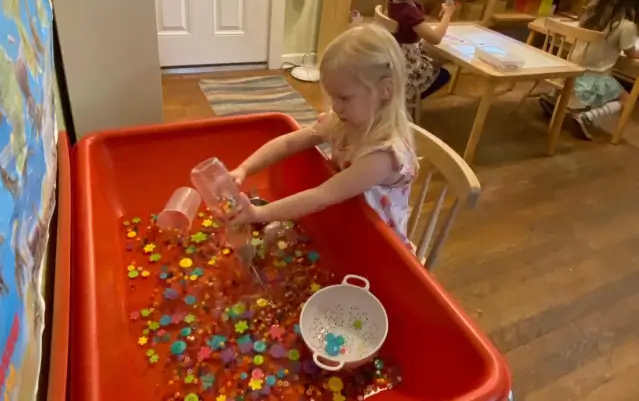
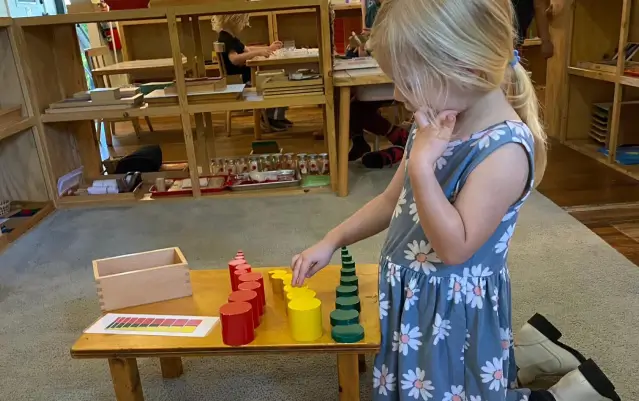
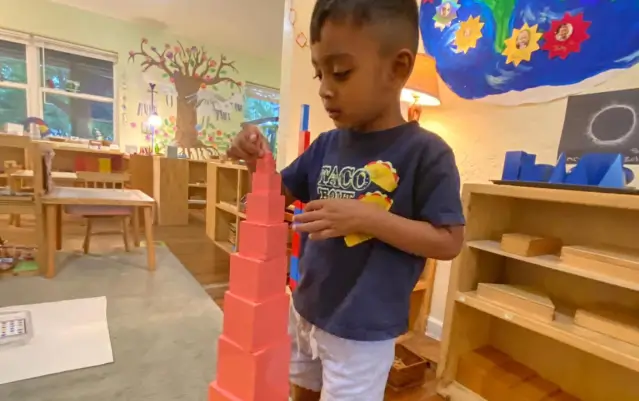
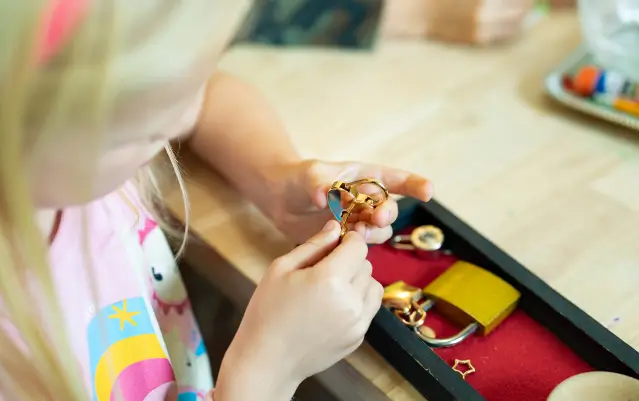
The Sensorial Area is one of the core academic areas of the Montessori Primary Classroom. This area is designed to help children refine their senses and develop their ability to observe, compare, and contrast various attributes of the world around them. The Sensorial area offers children not only the opportunity to explore and discover, but also to develop their concentration, attention to detail, and problem-solving skills.
The philosophy of the Sensorial area is based on the idea that children learn best through direct experience. The materials in this area are carefully designed to isolate a specific sensory quality, such as color, shape, texture, sound, and weight. By manipulating these materials, children can develop their ability to discriminate and classify sensory information, which lays the foundation for more complex cognitive processes.
Mathematics
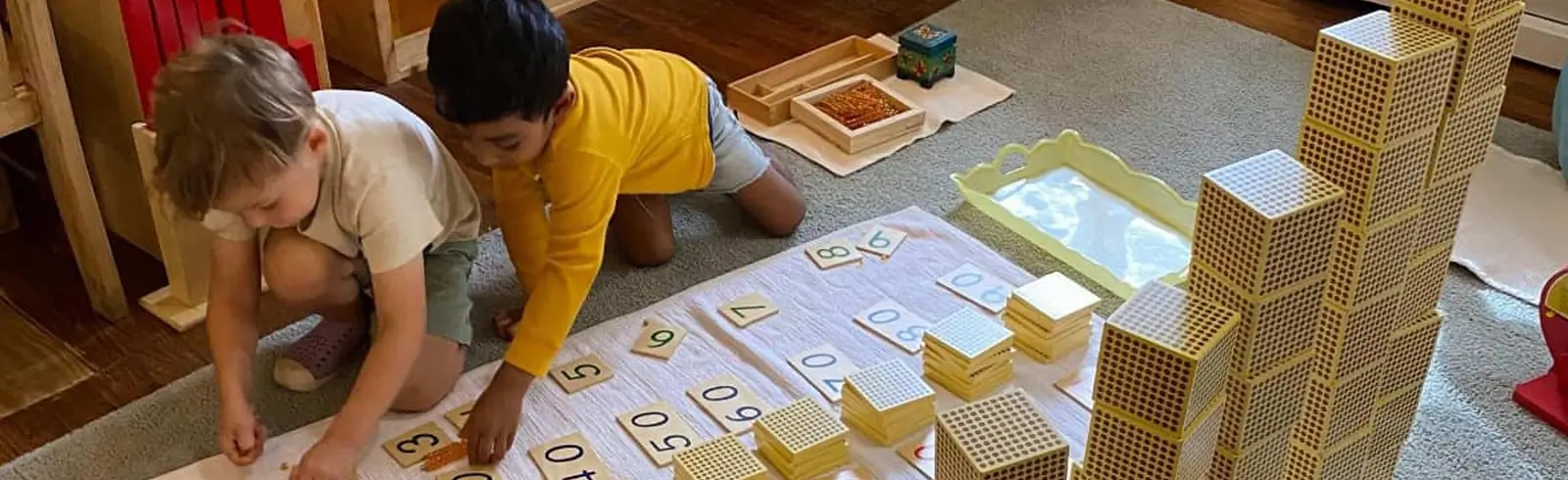
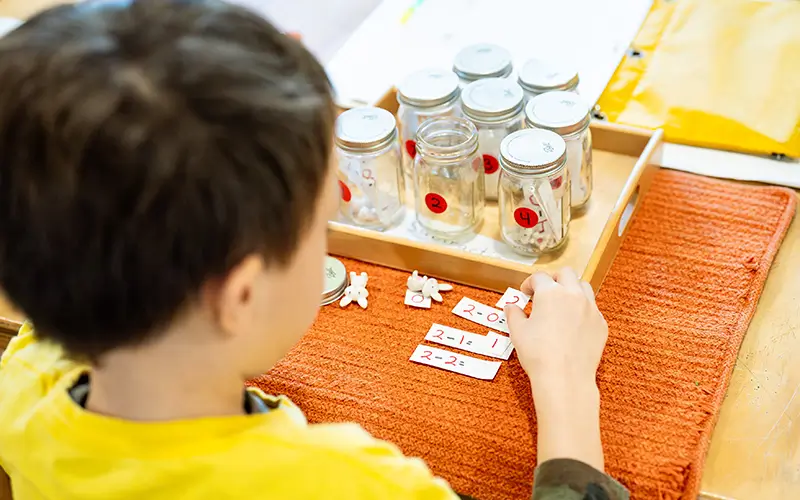
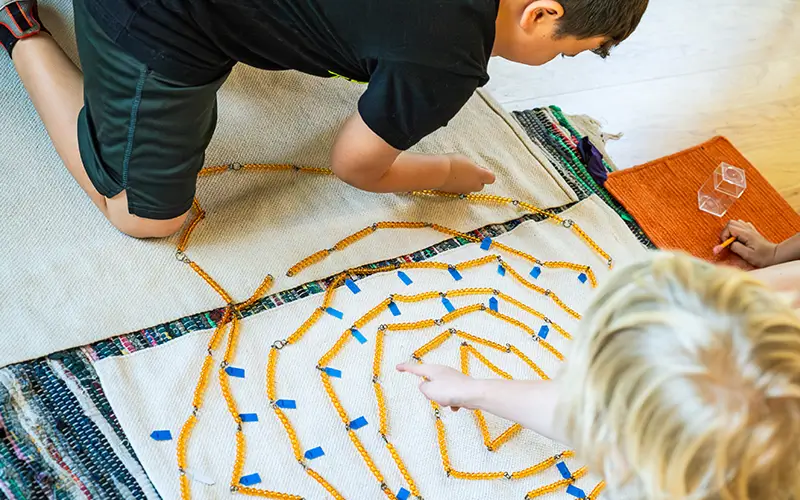
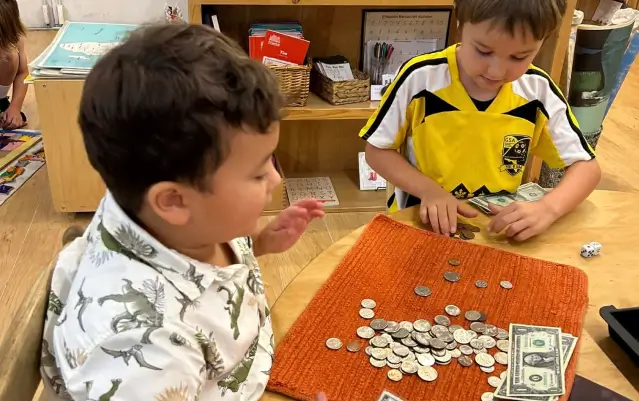
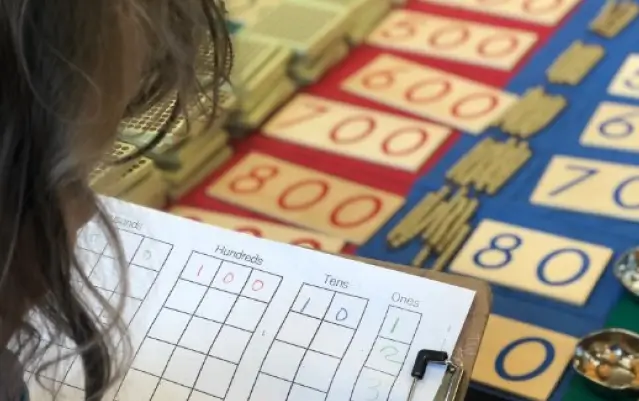
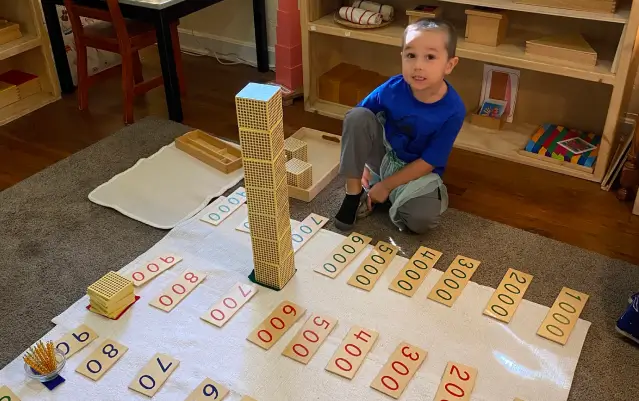
In the Montessori classroom, mathematics is not taught through memorization or worksheets. Instead, it is a dynamic, hands-on journey that allows children to understand math deeply, beginning with tangible, concrete experiences and gradually moving toward abstract reasoning. Unlike other approaches to early math instruction that rely heavily on memorization, Montessori Math places a premium on hands-on, experiential learning, and its immersive approach to math builds a strong foundation for a lifetime of numerical fluency and problem-solving skills.
Dr Maria Montessori realized that all children have a “Mathematical Mind” and that when they are given the opportunity to explore math in a concrete way, through “hands-on materials”, abstract math concepts become easier to comprehend. This philosophy recognizes that young children learn best through their senses and their hands, not through abstract symbols on a page.

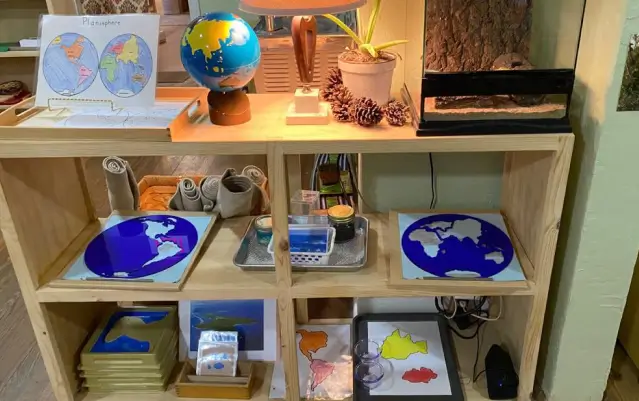
Cultural Exploration
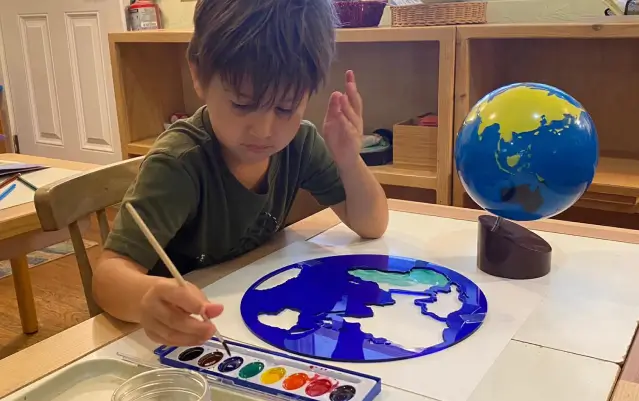
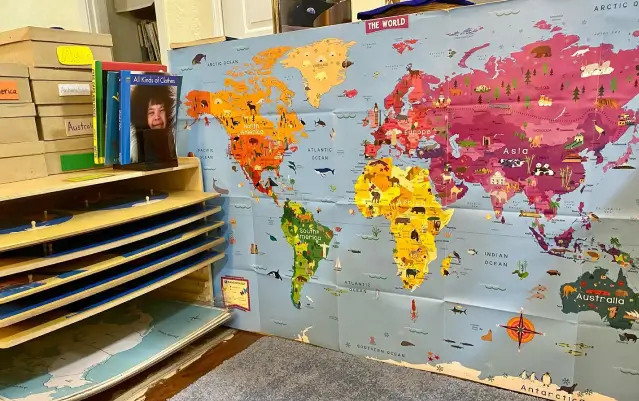
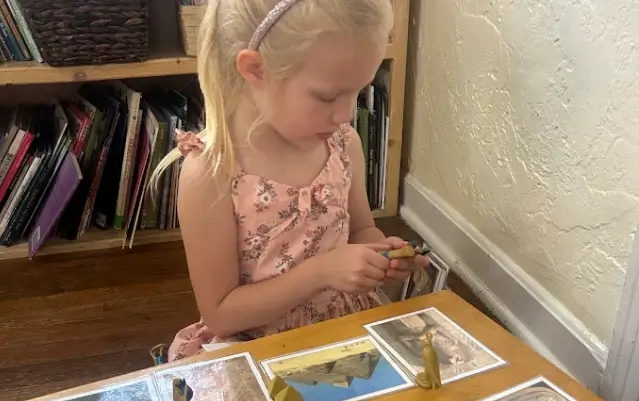
In the Montessori preschool classroom, there are six areas for cultural
exploration: The World (Geography), The World of Plants (Botany), The World of
Animals (Zoology), The World of Science, The World of Art and The World of
Music. The science and geography activities that a child finds in a Montessori classroom are designed to “put the world in the palm of his hand”. Children work with maps, learn about various cultures around the world, celebrate similarities and differences, and ponder the beauty of the natural world.
- The World (Geography)
- The World of Plants (Botany)
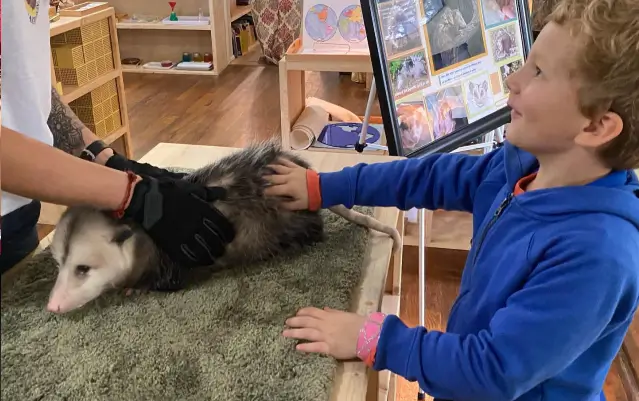
- The World of Animals (Zoology)
- The World of Science
- The World of Art
- The World of Music
AGES 3 – 6
In the original Italian, Dr Maria Montessori coined the words casa dei bambini, which translates to Children’s House.
We use the term Children’s House to designate a Montessori preschool because we do not view it as “pre” school. We see it as a very relevant “school” that meets the child’s physical, emotional and intellectual needs between the ages of three and six.
Montessori encourages children to learn from each other. The early childhood classroom in Gainesville, FL, also known as the Children’s House, is made up of 15-18 children aged three to six. The multi-age environment gives children the opportunity to learn from others. Children are given lessons individually or in small groups and are encouraged to explore materials and activities carefully selected and sequenced to cultivate independence and concentration. The classroom and school communities tend to be rather stable, with just the oldest third moving on to the next level each year. With children growing together over many years, close relationships develop among the children and adults.
Frequently Asked Questions
Choosing the right early childhood education program is a crucial decision for parents. In Gainesville, our programs are designed to foster creativity, critical thinking, and social skills. We understand that each child is unique, and our tailored curriculum ensures that every child can thrive at their own pace.
Safety is our top priority. Our Gainesville early childhood education center is designed to provide a secure environment where children feel comfortable to explore and learn. Our facilities are equipped with modern amenities, and our experienced staff is trained to provide the highest level of care.
